What is tannin dyeing?

What is tannin dyeing?
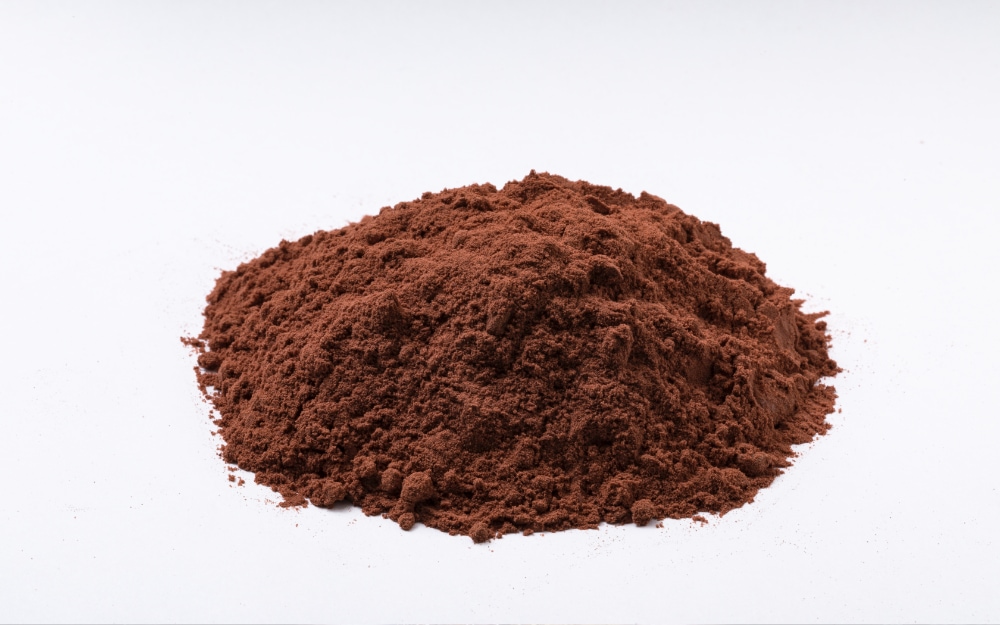
Tannin powder of Italian chestnut The first generation started the business before the war, and since 1966 three generations have been dyeing fabrics in a town factory near Toji temple in Kyoto.
Water used in the process is drawn from an abundant underground spring and no chemical dyes or pigments are used.
This is an environmentally friendly sustainable material that also takes into account the problem of wastewater after dyeing.

The canvas is woven tightly on traditional shuttle looms and the tannin powder is applied to the surface of the cloth and dyed to give a firm finish with no sagging.
The process of soaking dense, mixed fabrics with tannin powder is a craftsman's art that requires several times more effort and time than dyeing with chemical dyes.

Tannin powder of Italian chestnut
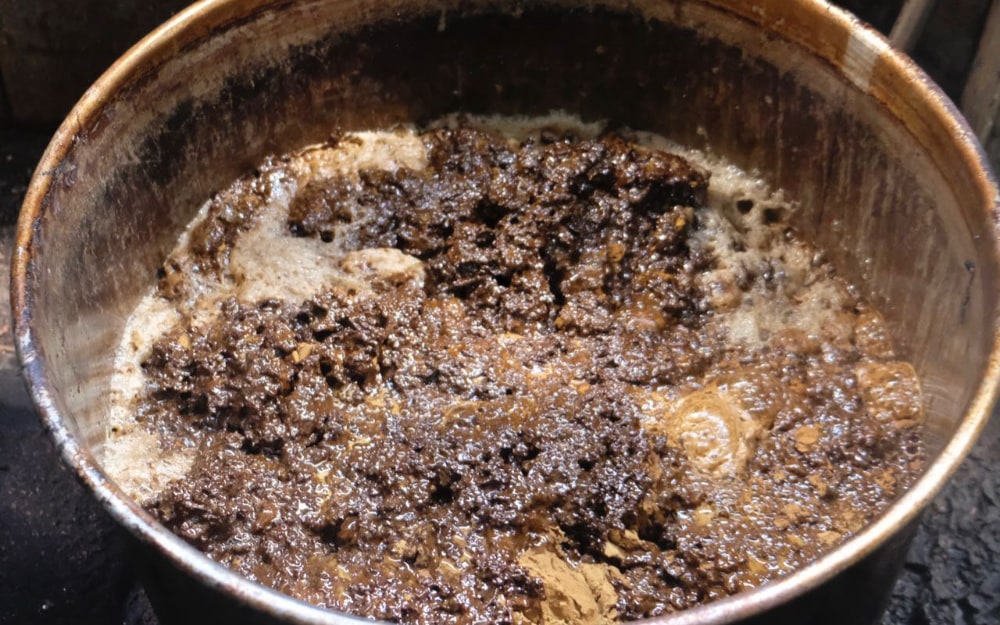
Tannin powder being mixed with boiling warter Tannins are polyphenols, a substance that plants have to protect themselves from external enemies.
The rot-resistant bark of chestnut trees and mimosa has long been used to tan hides, Mimosa, which is insect resistant, has been used to prevent rot and give a soft texture.
In Japan, persimmon tannin has been commonly used as a waterproofing and preservative dyeing material.

We dye our products with tannin powder from mimosa and chestnut trees over 100 years old, imported from Africa and Italy.

Tannin powder being mixed with boiling warter

Craftsmanship and time

We dissolve the tannin powder in a tank of boiling water and allow it to soak into the material while stirring.
No special penetrating agent is used at this time.
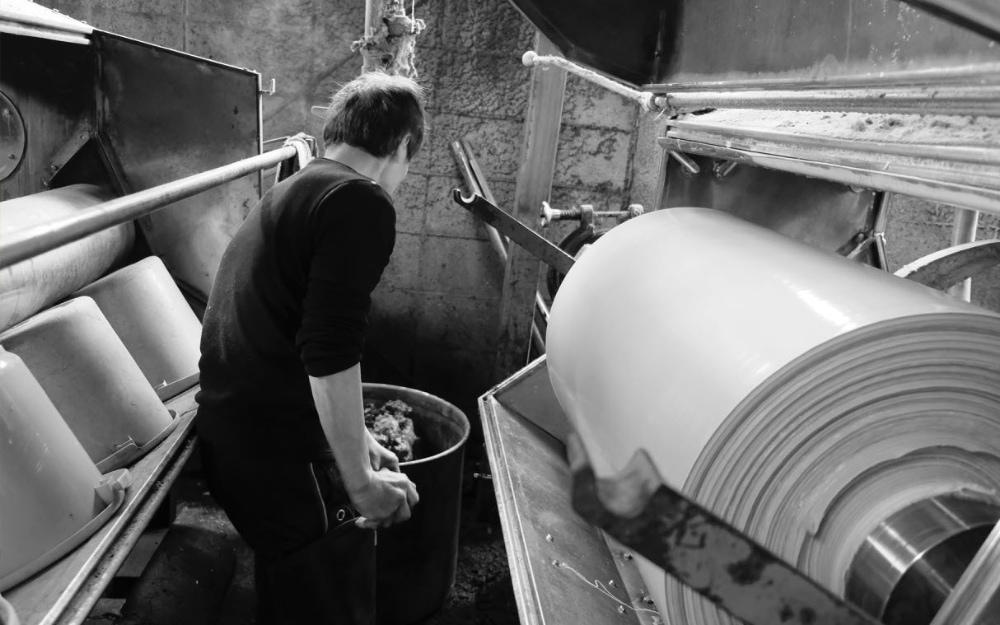
Fifty metre sheets of fabric are joined together to dye approximately 300 metres of fabric.
It is then rolled in and out of the tank in a jigger dyeing machine for 3-5 hours.
The process is carried out with the intuition of an experienced craftsman.
Finally, a mordant is added to change the colour and also acts as a colour fixer.
Loose twisted or loosely woven yarns have a higher density because they penetrate the fibres more easily.

However, the canvas we use is made from two or four twisted yarns, which are tightly beaten on a shuttle loom, making it difficult for tannin to get into the yarns and making it take longer for the colour to set in.
It is a unique material created by craftsmanship and time.