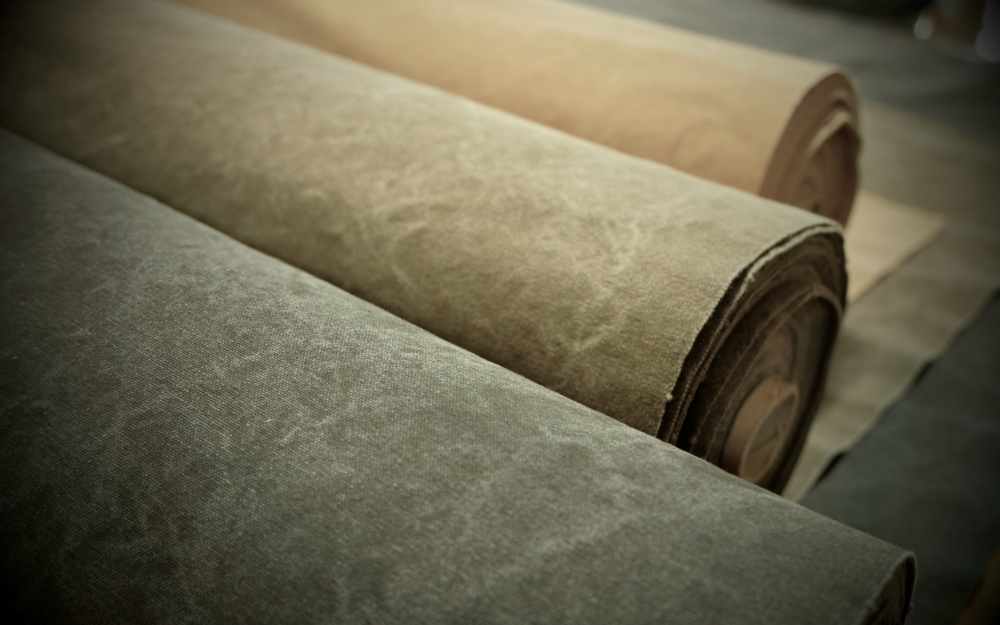
Traditional weaving Methods

Traditional weaving Methods

The basic woven fabric is called canvas.
It is woven on shuttle looms made after World War II in a factory in Kojima, Kurashiki, in the Prefecture of Okayama Prefecture, which has a long history.
The Kurashiki cloth developed by Japanese industry using traditional weaving methods and preserving natural materials has continued to be part of the Japanese textile industry and part of people's lives.
Over time, weaving machines have become faster and more precise due to the high demand. The shuttle loom, which was discontinued in the 1960s, is still carefully cared for and carefully used to maintain the same quality and texture.
Advanced yarn twisting technology has been handed down for more than 130 years.
A yarn with both suppleness and strength is produced by twisting together several 100% cotton yarns.
We have been using the same loom for over 30 years because we love the heaviness and texture of this fabric.
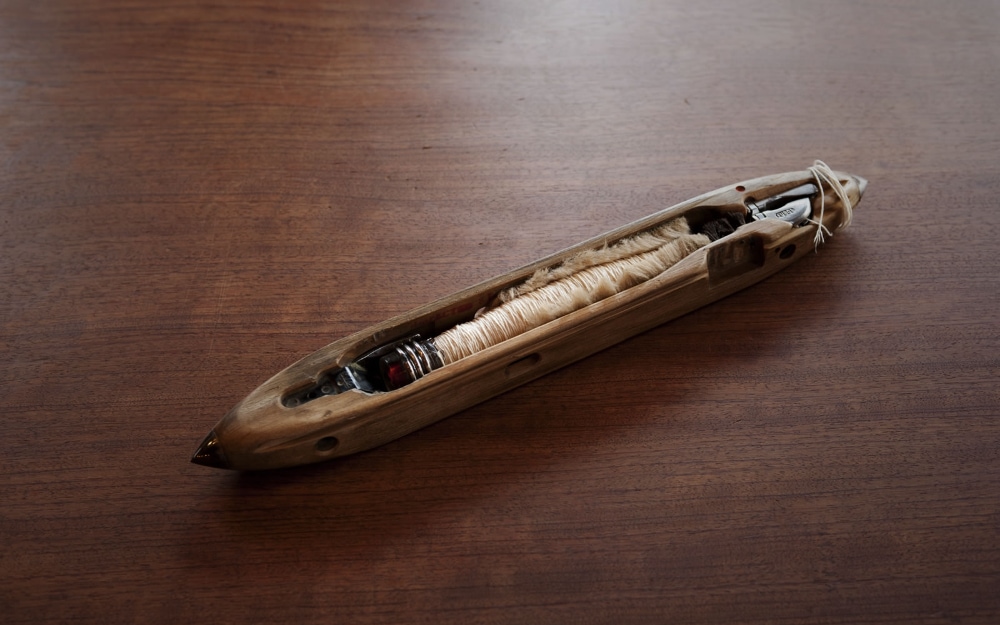

The warmth of the loom and the craftsman's hands

The warmth of the loom and the craftsman's hands

Shuttle loom discontinued in 1960s. The shuttle machines, which were discontinued in the 1960s, are still cared for and used with great care to maintain the same quality and consistency.
Shuttle looms are able to weave beautifully and evenly right up to the edge of the canvas.
These beautifully even edges, which are not found in canvases produced abroad, are proof of the highest technical skill and quality of the Kurashiki canvas, which is why it is called first-class canvas.
These beautifully aligned edging, which are not found on foreign canvas, are the proof of Kurashiki canvas's supreme technical skill and quality, which is why it is called first-class canvas.
Once woven, the fabric is carefully checked for flaws, and those that need to be repaired are carefully finished by hand.
The warmth of many people's hands is put into this fabric.

Shuttle loom discontinued in 1960s.

Final wash

Final wash

The dyed state of the fabric is hardened and boarded up with resin.
It can become uneven and stained, so the fabric is washed in large washing machines in factories that also wash jeans products.
To give the fabric a vintage look, after dyeing, we add a process that gives the fabric its wrinkled effect.

About waterproofness

About waterproofness

A frequently asked question is: Is tanning-dyed canvas waterproofed?
We are also asked.
Do you stick to natural dyes for dyeing and apply a coating at the end?
We have wondered whether we should do so or not, but we do not waterproof our products.
Both the No. 9 and No. 6 canvas we handle have a high weave density, which is further increased in the final washing process.
The moisture expands the threads, so even if the fabric gets wet, a little rain will not soak through to the inside.